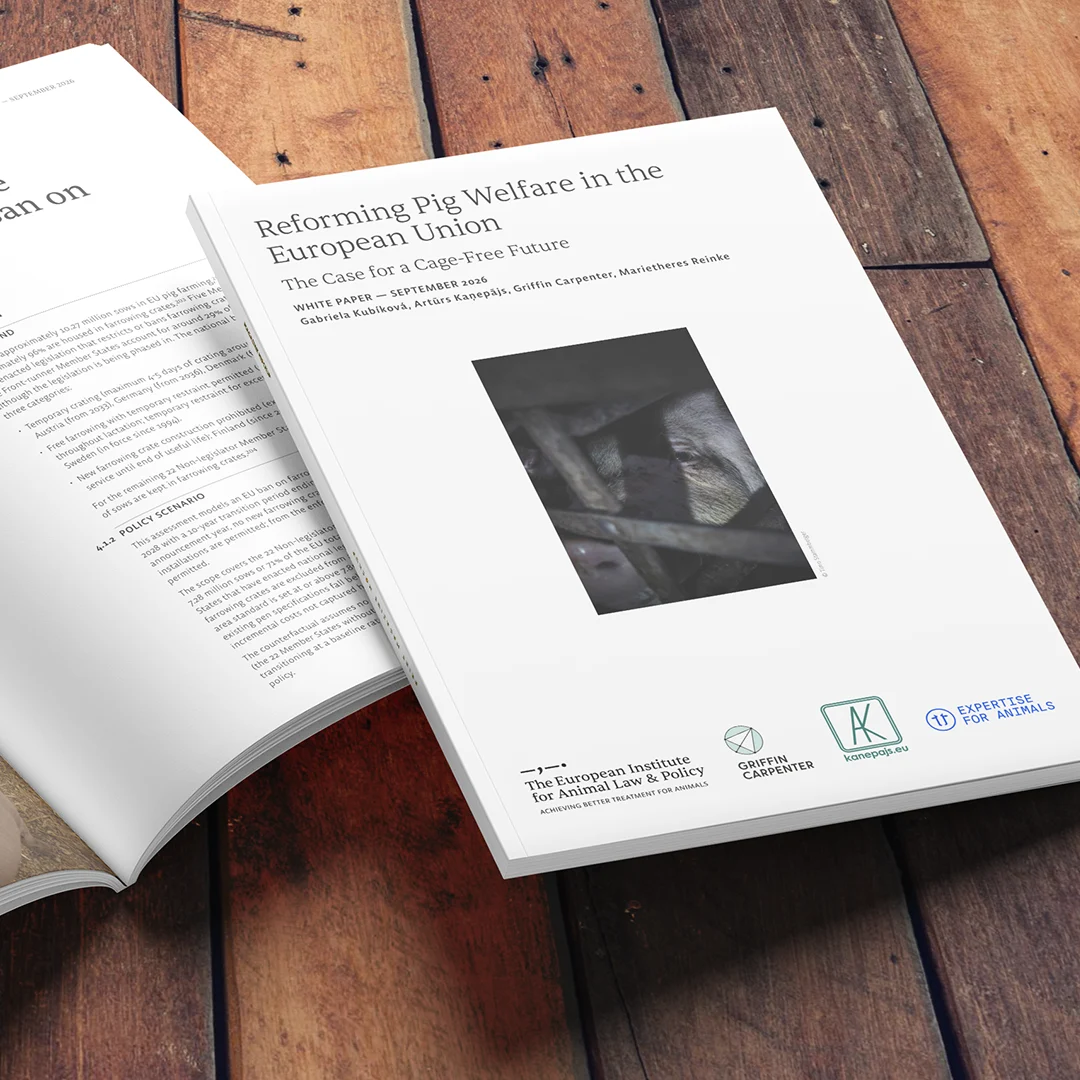
“Neues White Paper zum Schutz von Schweinen in der EU”
Our new White Paper, “Reforming Pig Welfare in the European Union: The Case for a Cage-Free Future,” has been featured on the website of the German Veterinarian Network.

The European Commission revealed its Livestock Strategy today, adding yet another document to the Commission’s announced reforms for farmed animals. But announcements alone will not improve the lives of animals. We will continue the fight, with other animal advocates and concerned citizens, to make sure the Commission follows through on today’s announced reforms.
The Commission’s Livestock Strategy is simply a communication to the other EU institutions stating what the Commission plans to do – but it creates no legal obligations and, by itself, does not change legislation for animals. So what’s in today’s strategy, and is there any reason for optimism?
Overall, the strategy recognizes the need to “future-proof the sector by strengthening animal welfare conditions and minimising its climate and environmental footprint.” It also concedes that “animal welfare is at the heart of citizens’ concerns when it comes to livestock farming.” Specifically, the strategy announces it will “phase out cages” for laying hens and broilers, and reiterates the end of 2026 as the date by which it will propose the legal revision. The phase-out itself, notably, is not dated. As has happened many times before, the Commission has announced a laudable ambition without committing to a timeframe for accomplishing it. It instead stresses the need for “sufficient transition periods” and “support that spans the next financing period and beyond.”
The Commission also recognizes the need to engage in “further efforts to bring down the costs and scale up the deployment” of in-ovo sexing technologies, with the explicit goal of ending the killing of male chicks.
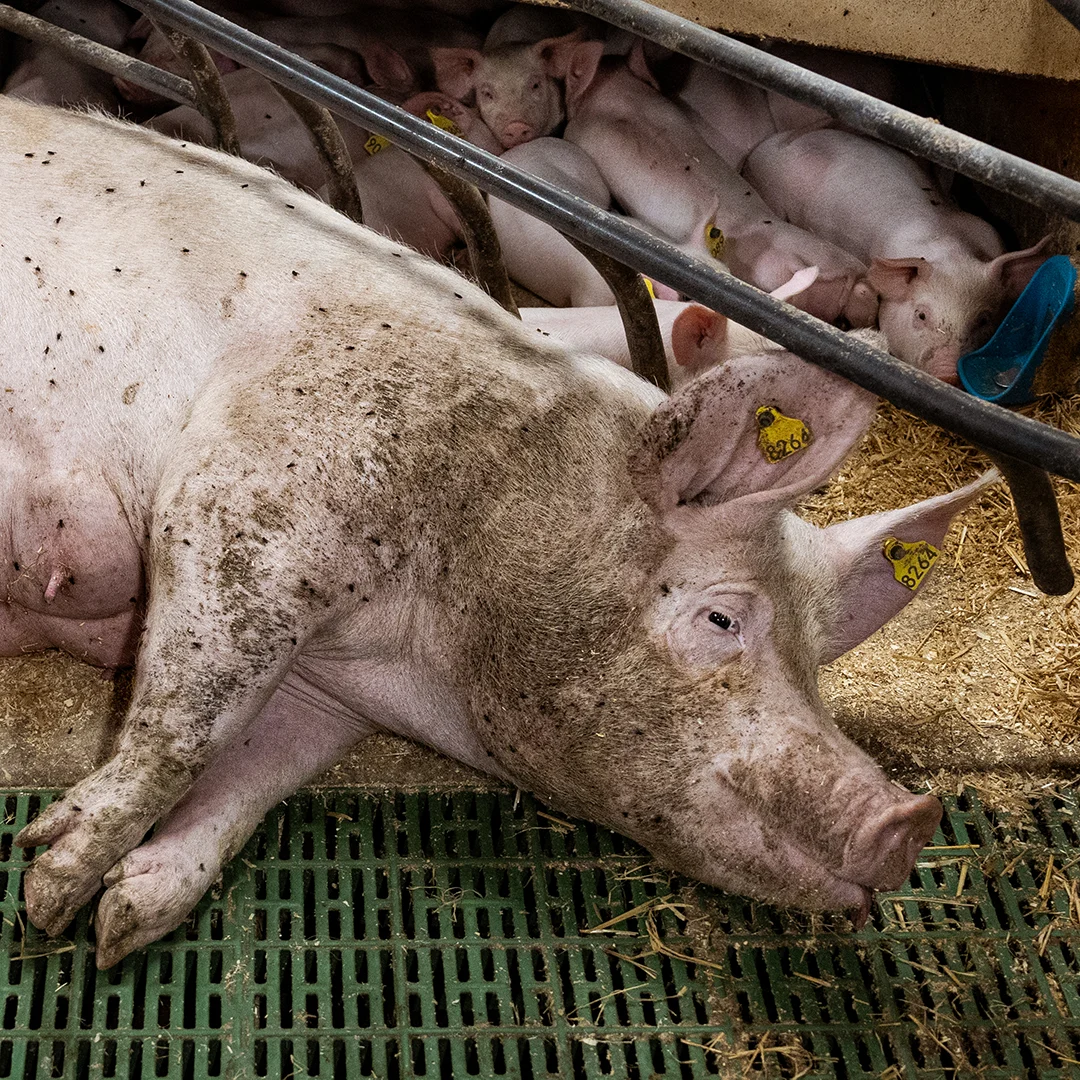
For the first time, the Commission has announced a cage-free reform for pigs (“transition from crates to pen systems”) by the second quarter of 2027. On live transport, which has had Parliament at loggerheads for more than two years, the Commission promises “consider further steps, including possible alternatives to the export of animals for slaughter from the EU to third countries.” Lastly, the Commission considers forcing importers to comply with EU chicken and pig welfare laws through “equivalent import requirements” – a measure both animal protection groups and EU producers have advocated for.
However, the strategy also raises many concerns. There is no plan to end cages for calves, rabbits, geese, ducks, and quails.
Worrying, too, is the claim that “Cutting-edge genomic and animal breeding techniques are a win-win for both economic and environmental outcomes.” Yet, genetic modifications and extreme breeding practices always come at the expense of the welfare of animals and can hardly be described as a “win-win.” The experience of the hornless cows created through gene editing, who then turned out to be resistant to antimicrobials, highlights the dangers of so-called “cutting-edge” genomic techniques.
Furthermore, despite the recent joint letter to Commissioner Hansen stressing that methane from agriculture must be addressed head on as a significant driver of climate change, the document changed the emissions calculation methodology to benefit biogenic methane emissions.
“In an ideal world, any ‘livestock’ strategy would propose a ban on factory farming,” says Gabriela Kubíková, the European Institute for Animal Law & Policy’s Legislative Advocacy Manager. “We can only regret how slow change is in this political context, at the expense of animals and to the benefit of dominant economic interests.”
“However, we’re glad to see concrete dates in today’s strategy, and we will be holding the Commission to those – especially in light of their past promises that are yet to be fulfilled. In fact, it’s now been almost three years since they missed the deadline for the publication of the proposals revising animal welfare legislation. We won’t rest until we see solid proposals with clear measures that respond to scientific recommendations and societal demand on how to improve animal welfare.”
Our new White Paper, “Reforming Pig Welfare in the European Union: The Case for a Cage-Free Future,” has been featured on the website of the German Veterinarian Network.
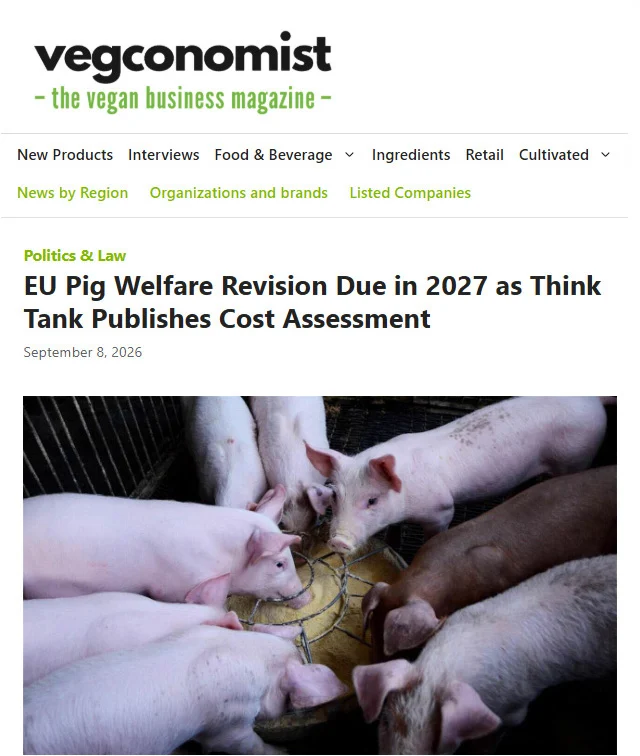
Our newly published White Paper, “Reforming Pig Welfare in the European Union: The Case for a Cage-Free Future,” made the news in Vegconomist, the vegan business magazine, today.
Our latest publication is a White Paper advocating for stronger protection of pigs under EU law through a prohibition of caged farming. “Reforming Pig Welfare in the European Union: The Case for a Cage-Free Future,” by Gabriela Kubíková, Artūrs Kaņepājs, Griffin Carpenter and Marietheres Reinke, presents a compelling argument for a transition to free farrowing in the pig sector, with the aim of informing the Commission’s ongoing modernization of animal welfare legislation.