Quelle place pour le bien-être des animaux d’élevage en droit de l’environnement ?

Alice Di Concetto a publié, avec Aude-Solveig Epstein, une contribution au recueil “Bien-être et normes environnementales” (Mare & Martin, sous la direction d’Isabelle Michallet). Cet article détaille la place es animaux dans l’éthique environnementale d’une part, et l’éthique animale d’autre part, et la traduction de ces débats philosophiques en droit positif. Si la fracture entre […]

Alice Di Concetto a publié, avec Aude-Solveig Epstein, une contribution au recueil “Bien-être et normes environnementales” (Mare & Martin, sous la direction d’Isabelle Michallet). Cet article détaille la place es animaux dans l’éthique environnementale d’une part, et l’éthique animale d’autre part, et la traduction de ces débats philosophiques en droit positif. Si la fracture entre la vision de l’animal portée par l’éthique environnementale et celle portée par l’éthique animale est importante en théorie, une telle opposition s’avère être davantage nuancée en droit positif.

Related Posts

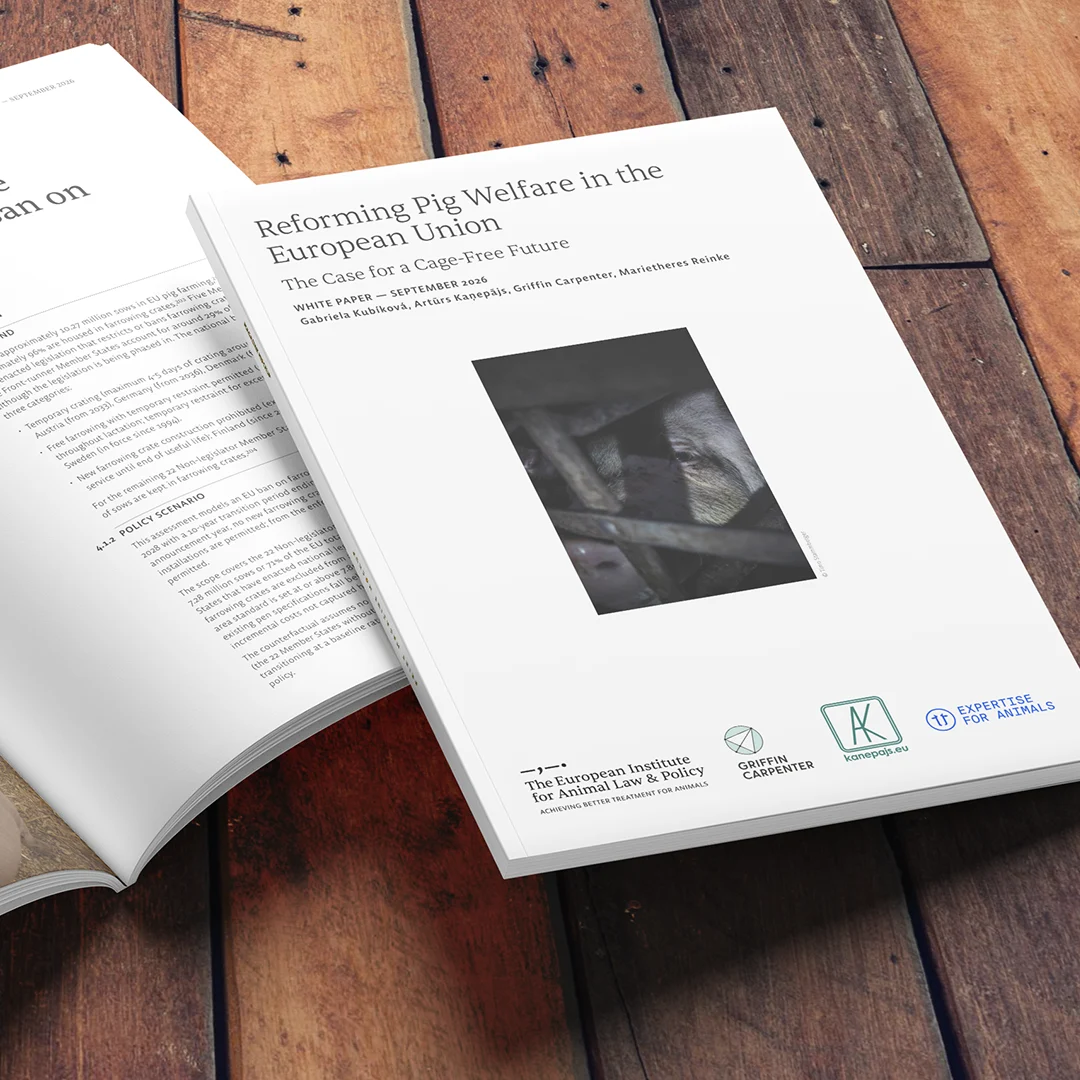
Our new White Paper: “Reforming Pig Welfare in the European Union”

Our latest publication is a White Paper advocating for stronger protection of pigs under EU law through a prohibition of caged farming. “Reforming Pig Welfare in the European Union: The Case for a Cage-Free Future,” by Gabriela Kubíková, Artūrs Kaņepājs, Griffin Carpenter and Marietheres Reinke, presents a compelling argument for a transition to free farrowing in the pig sector, with the aim of informing the Commission’s ongoing modernization of animal welfare legislation.

Confused about the omnibus proposals? Fret no more!

Our new Omnibus Tracker offers a centralized, user-friendly overview of the scope of the European Commission’s ten “omnibus” regulations, which amend dozens of regulations and directives simultaneously, and how they relate to animal protection issues.

Out now: “Animals in EU Economic Law: A New Approach to Protecting Sentient Beings” 

Despite decades of EU legislation and constitutional recognition of animal sentience, industrial farming, the wildlife trade, and animal-based research continue to thrive. A new book edited by Prof. Aude-Solveig Epstein and Alice Di Concetto argues that meaningful progress for animals will remain limited unless economic law itself is rethought and reformed in a consistent, systemic, and far-reaching manner, placing animal welfare at the heart of corporate governance and market regulation.

© 2026 The EUROPEAN INSTITUTE FOR ANIMAL LAW & POLICY. All Rights Reserved.